
The Wound That Votes
Nostalgia, Grief and the Politics of Division

I must confess that I feel slightly inadequate writing a political post and while I’m very politically engaged, and have been since I was about 14 years old, politics is not my natural writing genre. It’s the home of endless pedantry and righteous disagreement which holds far too few solutions to sustain my interest.
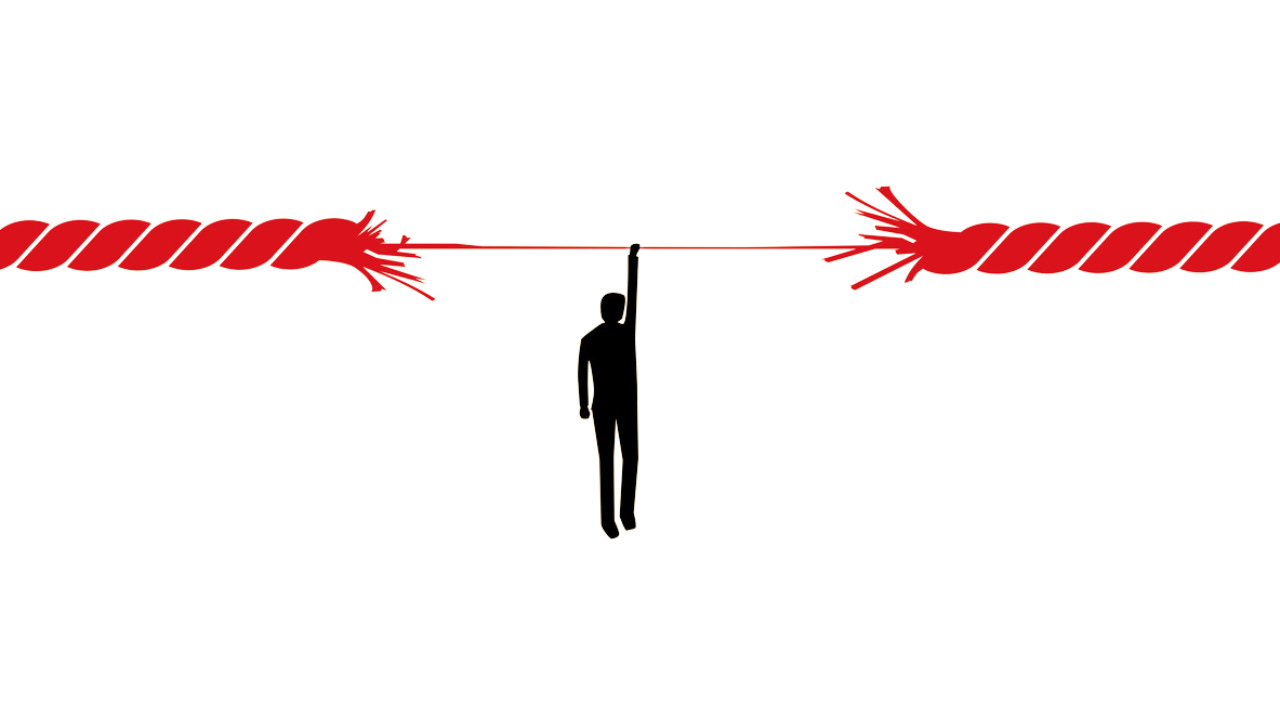
However, the lens through which I view politics is steeped in my usual musings; trauma, belonging, mattering, social injustice, activism, grief, loss and community. With this in mind, in the context of this week’s local elections in the UK, I’ve been thinking about the particular ache that many of us carry but rarely name; a longing, not simply for the past, but for a version of the world that felt like a much kinder and more manageable place. This longing is, of course, ripe for exploitation. But why is that? In an era of escalating political polarisation, culture wars and mutual contempt between people of the same nation, it is tempting to reach for explanations rooted in ideology or misinformation. I don’t wish to dismiss either of those, but it might be a more honest reckoning to consider grief. The political climate we inhabit today is, in large part, a landscape of unmourned losses and nostalgia, and nostalgia is the symptom of grief that has nowhere else to go….
Nostalgia as a Political Force
I’ve recently been introduced to the work of Svetlana Boym’s, The Future of Nostalgia (2001), where she draws a crucial distinction between two modes of nostalgic feeling. Restorative nostalgia seeks to rebuild the lost home, to literally reconstruct what has been lost, treating the past not as memory but as fact. Reflective nostalgia, by contrast, dwells in longing itself. It is meditative, ambivalent and aware that the past cannot be recovered without distortion. Boym argued that restorative nostalgia is the more dangerous of the two, because it “proposes to rebuild the lost home and patch up the memory gaps” (Boym, 2001, p. 41), often with a refusal to acknowledge loss as loss.
The contemporary political landscape, from Brexshit Brexit to the rise of right-wing populism across the UK, Europe and North America, is saturated with restorative nostalgia. Slogans promising to “take back control” or “make America great again” are grief, dressed in political attire. They promise to undo a wound rather than to process it. This appears like a refusal to mourn, which is not neutral; it displaces grief into other forms such as rage, blame or the scapegoating of whoever is deemed to have stolen the world that once was.
The Sociology of Loss
Sociologist Zygmunt Bauman (2017), writing in the final year of his life, described this time we’re living in as one of retrotopia, a retreat from failed utopian futures into an idealised past. Unlike classical utopia, which projects longing forward, retrotopia looks backward, treating the nation, the tribe or a particular cultural moment as the locus of security and identity. Bauman argued that this retreat is animated by genuine insecurity due to the collapse of stable employment, a diminished welfare state and the acceleration of social change, but that it is politically captured and redirected into blame. We see this blame directed towards ‘immigrants’, different ethnic groups, ‘elites’ or whichever group can be constructed as the agent of disruption (Bauman, 2017).
This is consistent with what political psychologist Jonathan Haidt (2012) observed in his moral foundations theory. Grief over cultural loss, when unacknowledged and uncontained, does not simply fade. It becomes ideology.
Hooker (2023) distinguishes between grief, the painful often mobilising acknowledgement of real loss, and grievance, which is the politicisation of anticipated or symbolic loss by those accustomed to dominance. In the UK, echoes of this are visible in the divergent ways that, for example, post-industrial communities mourn the loss of manufacturing work alongside communities who are experiencing the ongoing material effects of racism or austerity and are expected to absorb their losses quietly. The politics of blame thrives in precisely this gap. When legitimate grief goes unrecognised, it is easily captured and redirected into grievance.

Individualism and the Collapse of the Commons
Part of what makes this grief so difficult to process collectively is the very individualism that late capitalism has made into a virtue. Psychologist Oliver James (2007) uses the term “selfish capitalism”, to describe a social arrangement that prizes individual achievement and private consumption whilst dismantling the communal structures through which loss has historically been metabolised. Grief, like most profound human experiences, is not a private affair. It is processed through ritual, community, storytelling and shared acknowledgement. When those structures are weakened, grief becomes privatised and privatised grief is volatile grief.
We spend our time living in pseudo-communities on social media, some of which are owned by a man who capitalism has allowed to amass a private wealth into trillions of dollars. People feel loss with nowhere for it to go. The wound is open and blame rushes in to fill the space that mourning might have occupied.
Sedikides and colleagues (Dang et al., 2026) have recently argued that nostalgia and declinism, though frequently conflated, are psychologically and socially distinct. Nostalgia, properly understood, is oriented towards a personally meaningful past and tends to generate social connectedness and a degree of openness to the future. Declinism, by contrast, idealises a collective past and produces a negative reading of the present alongside a deeply pessimistic view of what is to come (it’s not hard to think of a political party that adopts this very strategy). This maps strikingly onto Boym’s earlier distinction between reflective and restorative nostalgia and gives it empirical grounding. What is politically weaponised in the rhetoric of division is not, in the main, nostalgia in its fuller sense; it is declinism wearing nostalgia’s clothes. The danger is that the two become indistinguishable in public discourse and in doing so, discredit the genuine, more reflexive longing that might otherwise form the basis for honest political conversation.
Towards Reflective Mourning
Boym (2001) work, which inspired these reflections and explorations, does offer some hope. Reflective nostalgia, she argued, does not seek to reconstruct what has been lost; it sits with the longing itself, attending to the texture of memory rather than demanding its literal restoration. This is a different kind of work. It requires acknowledging that something real has been lost, such as the security of stable work, the communities that we yearn for (and listen to the generations before us talk about at length) and affordable food, fuel and electricity! These are not imaginary grievances, even though they are politically manipulated everywhere we turn.
What Boym’s reflective nostalgia offers then is not a solution to the political polarisation that is playing out in front of our very eyes, but something more real. Rather than asking who took this from us, it asks what did we actually have and what can we truthfully carry forward? That shift, from blame to mourning, is small in theory yet enormous in practice. Grief that is named and held, as bereavement researchers such as Stroebe and Schut (1999) have long argued, moves differently through a person than grief that is avoided or redirected. The same may be true of the body politic.
As it stands, the structural conditions that generate loss, such as precarious work, housing insecurity and demolished public services, remain intact. Mourning alone does not dismantle those conditions. But a politics that cannot first reckon with what people have genuinely lost is unlikely to offer anything more than the next cycle of resentment. The question is… where and who is the political leadership that could enable this shift to happen?
References
Bauman, Z. (2017). Retrotopia. Polity Press.
Boym, S. (2001). The future of nostalgia. Basic Books.
Dang, Jianning & Sedikides, Constantine & Wildschut, Tim & Liu, li. (2026). Juxtaposing Nostalgia and Declinism: Divergent Associations With Social Connectedness and Responses to Innovative Technology. European Journal of Personality. 10.1177/08902070261433310.
Hooker, J. (2023). Black grief/white grievance: The politics of loss. Princeton University Press.
Haidt, J. (2012). The righteous mind: Why good people are divided by politics and religion. Pantheon Books.
James, O. (2007). Affluenza. Vermilion.
Stroebe, M., & Schut, H. (1999). The dual process model of coping with bereavement: Rationale and description. Death Studies, 23(3), 197–224.
As ever Lisa thank you for such a thoughtful article. I usually make sense of the individuals who double down into hate filled political ideology by understanding any challenge to beliefs feels like a personal attack so enmeshed is their belief with their identity. This article is such an interesting, compassionate and very different perspective and I wonder if it’s worth having those conversations with those potential leaders to create a space where grief can be held and processed as a community?
Thank you for naming how individualism makes collective grief difficult to process— I feel that so deeply!